
Search Oklahoma Obituary Records
Oklahoma obituary records help you find death notices, funeral details, and burial information for people who lived in the state. You can search for an obituary through newspaper archives, county clerk offices, and the Oklahoma State Department of Health. The state has 77 counties, and each one keeps local records tied to death notices and probate filings. Online tools like the Gateway to Oklahoma History let you look through old newspaper pages for free. If you need a death certificate, the Vital Records Service in Oklahoma City handles those requests. Start your search here to find Oklahoma obituary records from any part of the state.
Oklahoma Obituary Records Overview
Where to Find Oklahoma Obituary Records
The best place to start an Oklahoma obituary search is the Oklahoma Historical Society Research Center. The OHS has been collecting and sharing Oklahoma history since 1893. Their Research Center sits at the Oklahoma History Center, 800 Nazih Zuhdi Drive, Oklahoma City, OK 73105. You can call them at (405) 521-2491. They keep the Obituaries Listed in the Oklahoman database, which covers the years 1972 through 2009. This is an index, not the full text, but it tells you where to find each obituary in the state's largest newspaper. The center also has Ancestry Library Edition, Fold3, HeritageQuest Online, and Newspapers.com free for in-person use.
County clerk offices across Oklahoma also hold records tied to obituary research. Each of the 77 counties has a clerk who keeps land records, marriage licenses, and military discharge papers. These records can help you piece together a timeline when you search for a death notice. Probate records in particular often name the date of death and list surviving family members, which matches up with what you find in an obituary.
The Gateway to Oklahoma History is a free digital archive run by the Oklahoma Historical Society. It holds hundreds of thousands of newspaper pages from the 1840s to the 1920s. You can search by name, date, county, or newspaper title. Small-town papers in this collection often have detailed obituaries that never made it into the big city press. All of it is free to use with no login needed.
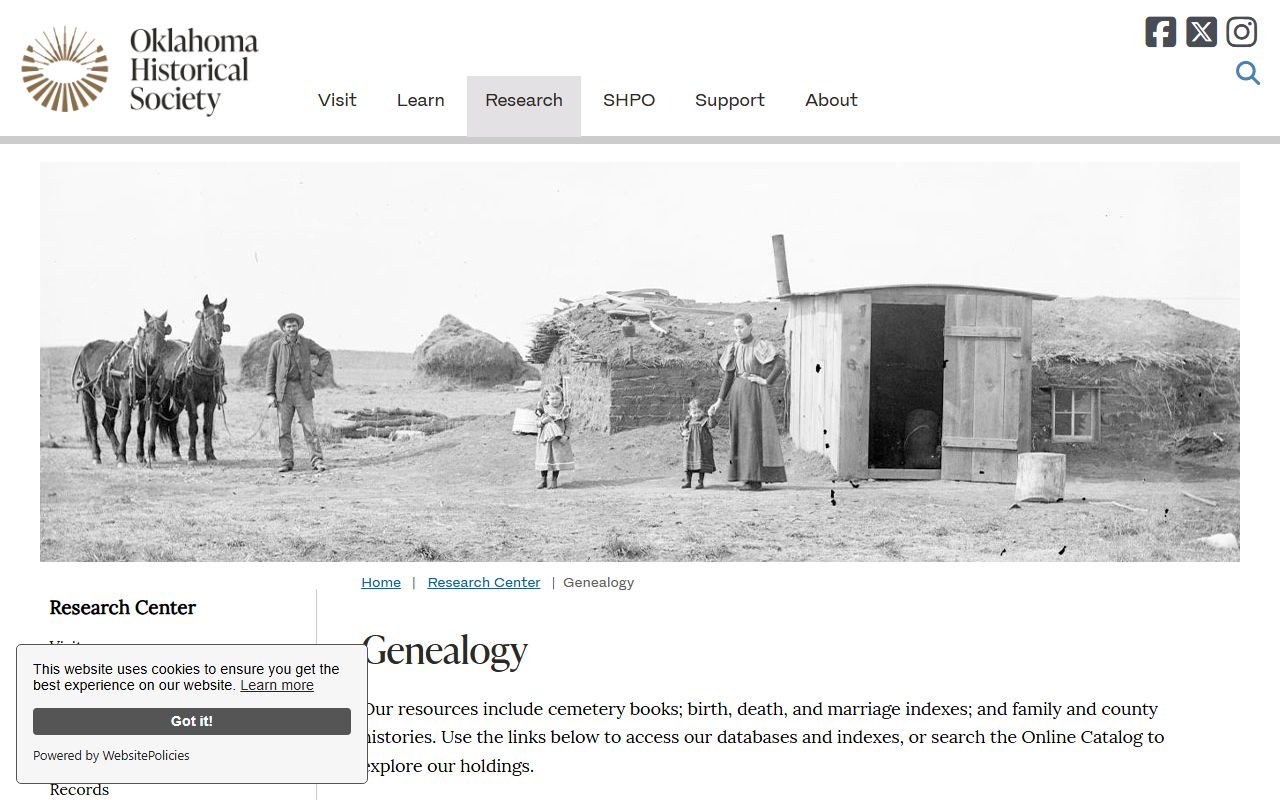
The Oklahoma Historical Society Research Center provides access to newspaper microfilm, genealogy databases, and the Obituaries Listed in the Oklahoman index for Oklahoma obituary research.
Oklahoma Death Certificate Records
The Oklahoma State Department of Health Division of Vital Records is the main office for death certificates in Oklahoma. They keep records for deaths in the state from October 1, 1908 to now. The office is at 1000 NE 10th Street, Room 117, Oklahoma City, OK 73117. You can also mail requests to PO Box 53551, Oklahoma City, OK 73152. Call (405) 271-4040 or email AskVR@health.ok.gov with questions. Hours are Monday through Friday, 8:30 am to 4:00 pm.
A death certificate costs $15 for each copy. You can pay by cash if you go in person, or by check or money order made out to the Vital Records Service. Under Oklahoma Statutes Title 63, Section 1-323, death records are not open for public inspection with limited exceptions. You must show you are acting in the best interest of the person who died. That means you need to be a spouse, parent, child, grandparent, sibling, legal guardian, or someone with a court order.
Here is a key rule for genealogy work. Death records from 50 or more years ago are open to the public. This change took effect on November 1, 2016. You do not need to prove you are related to get these older records. This makes it much simpler to search for an Oklahoma obituary or death record from the mid-1970s or before.
Filing was not required until 1917. Records from before 1940 may be spotty or missing because compliance was low in the early years.
The Legal Aid Services of Oklahoma death certificate guide walks you through the full process. It lists every form of ID you can use, explains how to amend a record, and covers the $25 amendment fee. If you need a death certificate for use in another country, the Oklahoma Secretary of State can attach an Apostille to your certified copy.
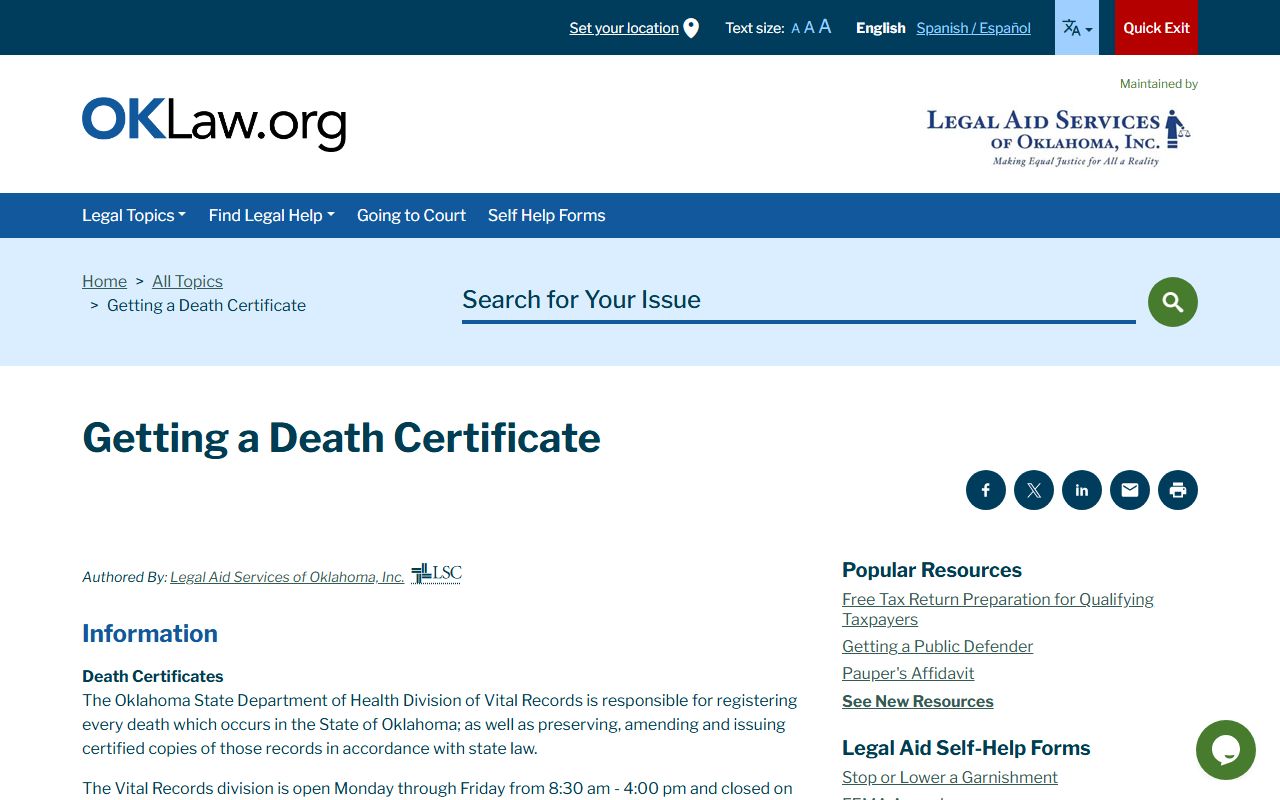
Legal Aid Services of Oklahoma provides a step-by-step guide for getting a death certificate, including ID requirements and eligibility rules.
Obituary Records and Digital Archives
The OHS newspaper collection has over 4,400 titles on about 33,000 reels of microfilm. That is the oldest and most complete newspaper collection in Oklahoma. These reels hold small-town weeklies, big-city dailies, and everything in between. Obituaries from these papers give you names, dates, family ties, and often the church or funeral home that handled the service.
Online, the Gateway to Oklahoma History puts a large chunk of that microfilm on your screen for free. It covers papers from every one of the 77 counties. You type in a name and a date range, and the system pulls up every page that matches. Death notices in old Oklahoma papers are surprisingly detailed. They often list the cause of death, the names of pallbearers, and where the person was buried.
The OK2Explore index is another free online tool run by the Oklahoma State Department of Health. It lists deaths that happened more than 5 years ago. You can search by name, date, county, and sex. It gives you the basic facts like the person's name, date of death, and which county the death took place in. This tool is helpful for checking if a record exists before you pay the $15 fee for a certified copy.
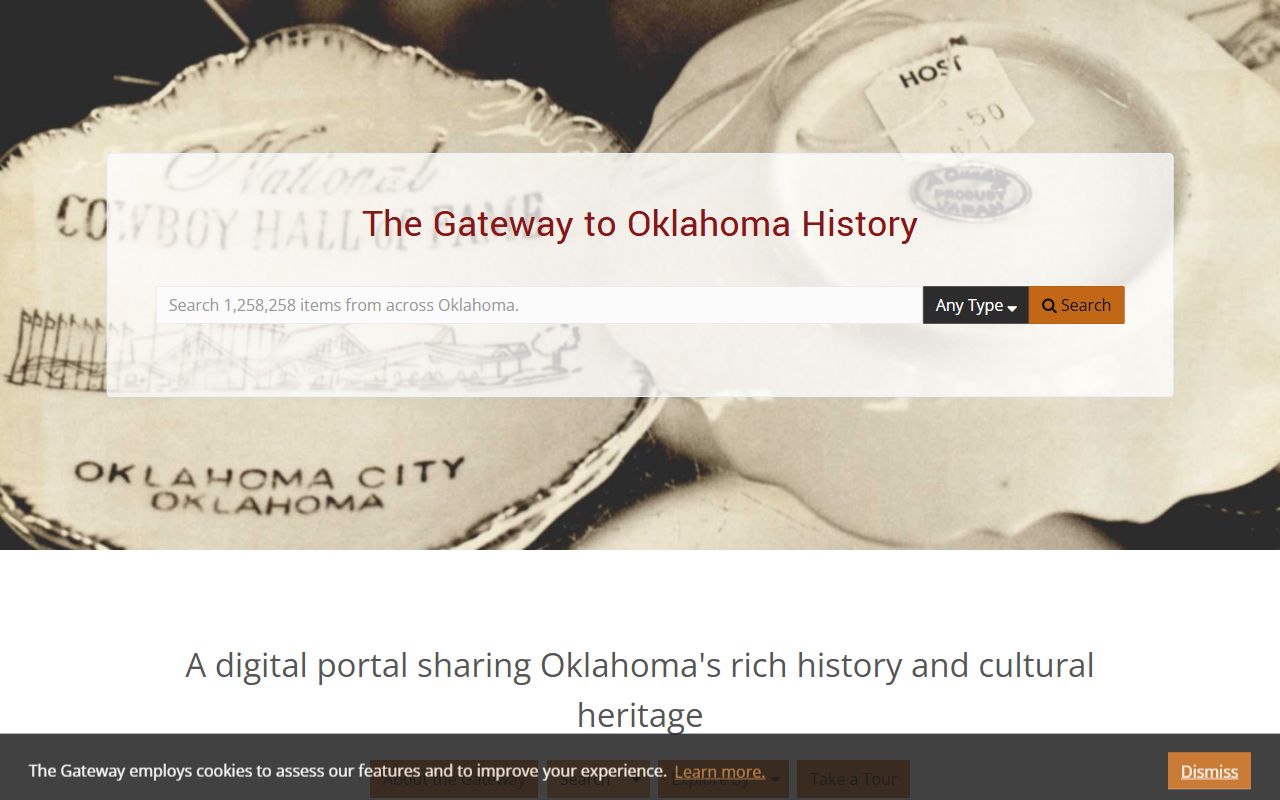
The Gateway to Oklahoma History offers free full-text searching of digitized newspaper pages dating back to the 1840s.
Note: Death data is not added to the OK2Explore index until 5 years after the death, so very recent records will not appear in this free search tool.
Court and Probate Records in Oklahoma
The Oklahoma State Courts Network gives you free access to court records from all 77 counties. OSCN is run by the Oklahoma Supreme Court. It has over 15 million cases going back to the 1990s with real-time updates. You can search by party name, case number, or case type. Probate cases on OSCN often tie directly to obituary research because they list the date of death, the names of heirs, and how property was split up.
Probate matters on file include wills, estate administration cases, and guardianships. When someone dies in Oklahoma, the probate process usually starts in the county where they lived. The court file may name a funeral home, list the date and place of death, and identify family members. All of this matches up with what you find in an obituary.
Some records are not on OSCN. Sealed cases, expunged records, and adoption files will not show up. Very new filings may take 24 to 72 hours to appear after the clerk processes them.
OSCN provides free 24/7 access to millions of Oklahoma court records including probate cases useful for obituary research.
Obituary Sources From Funeral Homes and Genealogy Groups
Funeral homes in Oklahoma are a direct source for obituary records. The funeral director who handled the service typically wrote or helped write the obituary. The Oklahoma Funeral Board licenses and regulates all funeral homes and directors in the state. Their office is at 4545 N. Lincoln Blvd, Suite 175, Oklahoma City, OK 73105. If you know which funeral home handled a service, you can contact them to ask for a copy of the obituary or the funeral program.
The Oklahoma Genealogical Society keeps resources that go beyond what government offices hold. They have publications on territorial and Indian Nation vital statistics, church and burial records of the Choctaw Nation, and an index to Oklahoma County probate records from 1895 to 1920. Their mailing address is P.O. Box 12986, Oklahoma City, OK 73157. The Society links to other historical groups across the state who may have obituary collections, funeral programs, and death records that you will not find through official channels.
Cemetery records are another strong source. They give you birth and death dates, and sometimes they show family connections that match up with what an obituary says. Many volunteer groups across Oklahoma have transcribed headstone information and put it online for free.
The Oklahoma Funeral Board regulates licensed funeral homes across the state, many of which hold original obituary records and funeral programs.
The Oklahoma Genealogical Society maintains publications on territorial vital statistics, church records, and burial information useful for obituary research.
Other Ways to Find Oklahoma Obituary Information
When a standard obituary search comes up short, other record types can fill in the gaps. Church records in Oklahoma often have death dates and burial details, depending on the denomination. Census records can help you narrow down when a person died if they show up in one census but not the next. Military records and pension files may list the date and cause of death for veterans and their widows. The Oklahoma Department of Libraries State Archives Division at 200 N.E. 18th Street in Oklahoma City holds Confederate Pension Records that often name the death date for veterans and surviving spouses.
The Social Security Death Index covers deaths from 1935 to 2014 for people who had Social Security numbers. It is one more way to pin down a death date when you cannot find an obituary right away.
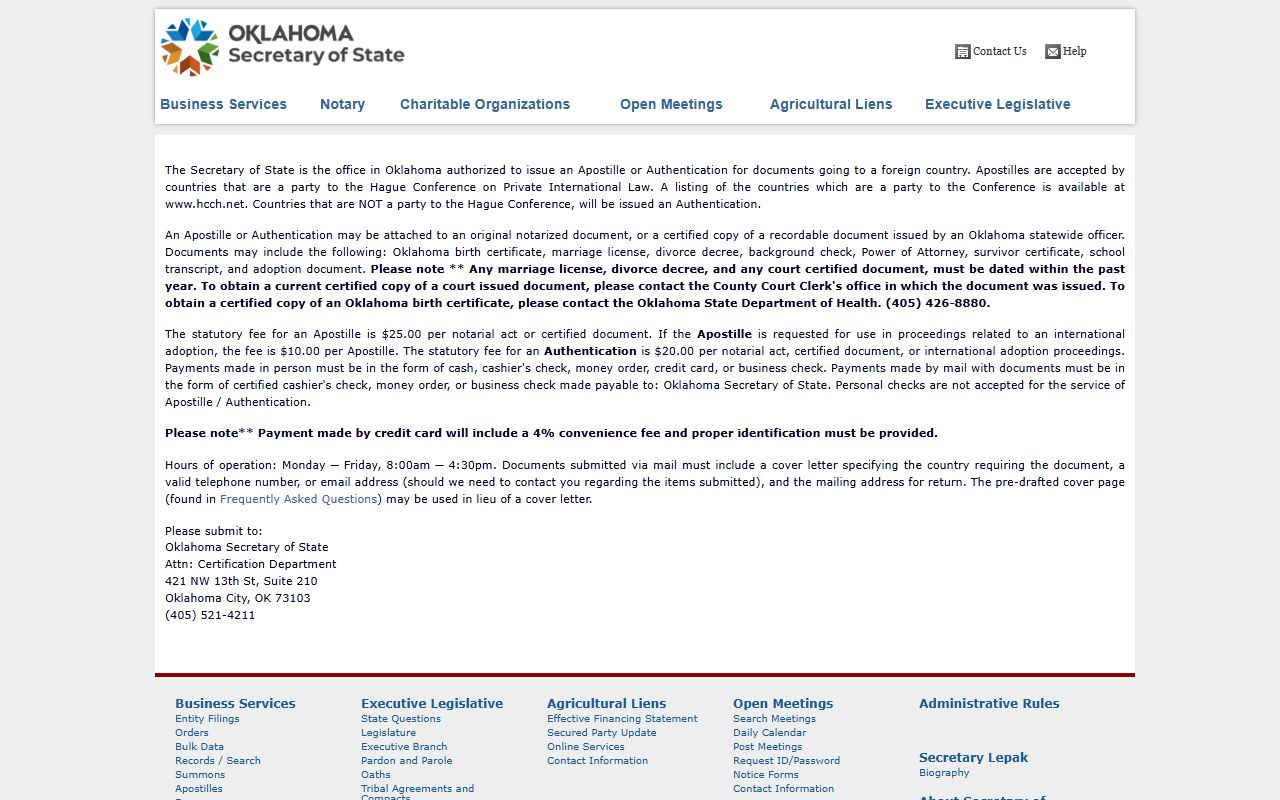
The Oklahoma Secretary of State can attach an Apostille to a certified death certificate for families who need the document for use in foreign countries.
Browse Oklahoma Obituary Records by County
Each of Oklahoma's 77 counties has its own clerk office and court system. Obituary records, probate filings, and death-related documents are kept at the county level. Pick a county below to find local offices, phone numbers, and resources for obituary research in that area.
Obituary Records in Major Oklahoma Cities
Oklahoma city residents file death certificates through the state and access obituary records from their county. Pick a city below to find which county handles records for that area.